









How does an RFA work?

Medically reviewed by Rainier Guiang, MD · Last updated June 17, 2026
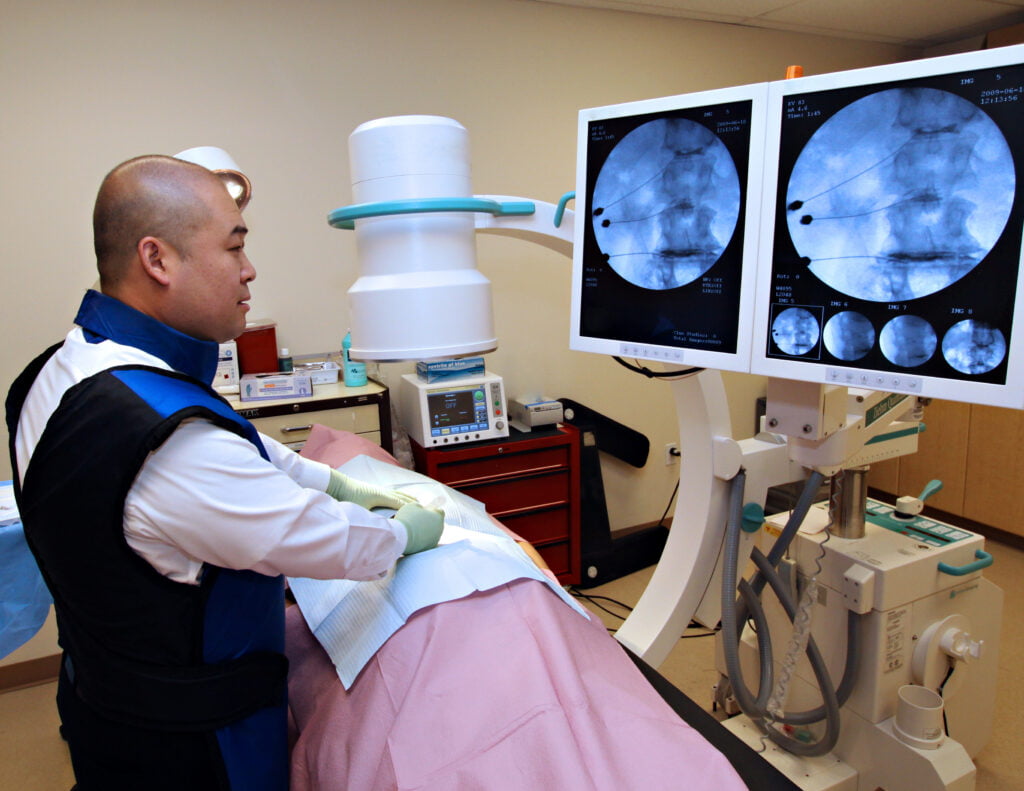
Physician performing a fluoroscopy-guided spinal injection at University Pain Consultants in Riverside, CA
Red Light Therapy for Chronic Pain — University Pain Consultants, Riverside CA
Red Light Therapy for Chronic Pain: What the Evidence Actually Says
A pain physician's honest, evidence-based look at red light therapy (photobiomodulation) for neck, knee,...
Platelet-Rich Plasma (PRP) — University Pain Consultants, Riverside CA
Platelet Rich Plasma
Advanced Regenerative Treatment for Pain Relief & Healing At University Pain Consultants, we offer...
Let People Know About Your SCS — University Pain Consultants, Riverside CA
Let people know about your SCS with this t-shirt
buy on Etsy Introducing a unique and educational T-shirt featuring a detailed illustration of a...
Does Vitamin C Help With Pain? — University Pain Consultants, Riverside CA
Does Vitamin C Help With Pain?
Does Vitamin C Help With Pain? Vitamin C, also known as ascorbic acid, is a nutrient that is essential...
Alpha-Lipoic Acid for Neuropathy — University Pain Consultants, Riverside CA
Alpha Lipoic Acid for diabetic neuropathy and sciatica - what does the science say?
Introduction  Diabetic neuropathy and sciatica are debilitating conditions that cause significant discomfort...
Opioid Constipation: OTC Options — University Pain Consultants, Riverside CA
Medication for opioid constipation - over the counter options
Opioid-induced constipation is a common side effect of using opioids for pain management. Opioids are...
Can Leaky Gut Cause Chronic Pain? — University Pain Consultants, Riverside CA
can leaky gut cause chronic pain?
Can Leaky Gut Cause Chronic Pain? Understanding the Connection Introduction: If you suffer from chronic...
Narcotic Contracts Explained — University Pain Consultants, Riverside CA
Narcotic Contracts - what you need to know
Disclosure: Unipain.com may earn a commission when you purchase through links on our site. As an affiliate,...
Penetrex vs Magnesium vs Voltaren — University Pain Consultants, Riverside CA
Penetrex, magnesium cream, Voltaren gel - which is best?
Disclosure: Unipain.com may earn a commission when you purchase through links on our site. As an affiliate,...
Coconut Oil for Chronic Pain — University Pain Consultants, Riverside CA
4 Benefits of coconut oil for chronic pain
Disclosure: Unipain.com may earn a commission when you purchase through links on our site. As an affiliate,...

What is an RFA?

Low back pain is a common ailment that affects millions of people around the world. There are several treatment options available for low back pain, including medications, physical therapy, and surgery. In this article we will discuss what a radiofrequency ablation (RFA) is.

Radiofrequency ablation is a medical procedure that uses heat generated by high-frequency electrical currents to destroy sensory nerves that transmit pain signals from the affected area. In the case of low back pain, RFA targets the nerves that supply the facet joints in the spine, which are the small joints that between bones that protect the spinal canal where the spinal cord is.

How is an RFA done?

During the RFA procedure, the patient is given local anesthesia to numb the area around the affected facet joints. A small needle is then inserted into the skin and directed toward the targeted nerve under the guidance of fluoroscopy, a type of X-ray imaging. Once the needle is in place, a small electrode is inserted through the needle and positioned next to the nerve.

The electrode is then heated, using a high-frequency electrical current, which creates a lesion on the nerve. This destroys the nerve’s ability to transmit pain signals, providing pain relief. The entire procedure typically takes about 30-60 minutes, and patients can return home the same day.

One of the advantages of RFA is that it is a minimally invasive procedure, which means that there is no need for general anesthesia or a hospital stay. 


How long does an RFA last?

Every patient is different and no one can guarantee any efficacy due to the many factors that can contribute to low back pain.  The average would be 3-6 months if effective.  However if the patient also has degenerative disc disease or spinal stenosis, the duration is usually shorter.


Risks of RFA

RFA is a safe treatment option for many patients with low back pain. However, as with any medical procedure, there are potential risks and complications, including bleeding, infection, and nerve damage. It is important for patients to discuss the potential benefits and risks of RFA with their healthcare provider to determine if it is the right treatment option for them.

Radiofrequency ablation is a minimally invasive treatment option for patients with low back pain. By targeting the nerves that transmit pain signals from the facet joints in the spine, RFA can provide long-lasting pain relief and improve function for patients. As with any medical procedure, it is important for patients to discuss the potential benefits and risks of RFA with their healthcare provider to determine if it is the right treatment option for them.

What RFA does not do

RFA is a treatment for pain that that originates from the facet joint. 

  • It does not permanently cure the problem.
  • It does not help with pain due to degenerative disc disease, sciatica, or spinal stenosis.  


Who Is a Good Candidate for Radiofrequency Ablation?

RFA works best when the pain is coming primarily from the facet joints of the spine rather than from discs, nerves, or other structures. Before recommending RFA, pain physicians typically perform diagnostic medial branch nerve blocks — small injections that temporarily numb the nerves supplying the facet joints. If those blocks provide meaningful short-term relief, it suggests that RFA targeting the same nerves may offer longer-lasting benefit.

Patients with pain that is largely due to degenerative disc disease, spinal stenosis, or sciatica are generally not good candidates for RFA, as the article above notes. A thorough evaluation, including imaging and a careful pain history, helps your provider determine whether your pain pattern is consistent with facet joint origin. Always discuss your specific situation with a qualified pain specialist before pursuing any procedure.

Because the nerves treated with RFA can regenerate over time, some patients benefit from repeat procedures. The timing and appropriateness of repeat RFA varies by individual, and your provider can help you track your response and plan accordingly.

Frequently Asked Questions

Is radiofrequency ablation painful?

The procedure is performed with local anesthesia and, in many practices, mild sedation to keep patients comfortable. During the recovery period it is common to experience temporary soreness or a flare of pain at the treatment site that can last a few days to a couple of weeks. This is a normal response as the tissue heals, and it does not necessarily predict the final outcome of the procedure.

How do I know if my back pain is coming from the facet joints?

Facet joint pain often presents as axial (central) low back or neck pain that may radiate into the buttocks or shoulders but typically does not travel down the leg below the knee the way sciatica does. It is frequently worsened by extension or rotation of the spine. Diagnostic nerve blocks are the most reliable way to confirm whether the facet joints are a significant pain source, and your physician can determine if that workup is appropriate for you.

Can RFA be repeated if the pain returns?

Yes, in many cases RFA can be repeated when pain returns after a successful prior treatment, because the targeted nerves can slowly regenerate. Repeat procedures are evaluated on a case-by-case basis, taking into account how much relief the previous RFA provided and how long it lasted. Your pain management team can help you decide if and when a repeat treatment makes sense.

Related Reading

Chronic joint or back pain? University Pain Consultants, Riverside CA.
Rainier Guiang, MD — Board-Certified Pain Management Physician
About the Author

Rainier Guiang, MD

Co-Founder, University Pain Consultants · Double Board-Certified in Anesthesiology & Pain Management

Dr. Rainier Guiang co-founded University Pain Consultants in 2007 and is double board-certified in anesthesiology and pain management through the American Board of Anesthesiology. He previously served as co-director of the ACGME-accredited pain management fellowship at University Hospitals of Cleveland / Case Western Reserve University School of Medicine, and has authored chapters in Weiner’s Pain Management. He has a strong interest in interventional, functional, and preventive approaches to chronic pain.