
If you smoke, the link between smoking and degenerative disc disease is one of the most important reasons to quit. Most people know cigarettes harm the lungs and heart, but far fewer realize that smoking and degenerative disc disease are closely connected — and that the same habit quietly accelerates degenerative joint disease (DJD) in the knees, hips, and other joints. Dr. Rainier Guiang, MD, of University Pain Consultants explains how it happens and what you can do about it.
How smoking and degenerative disc disease are connected
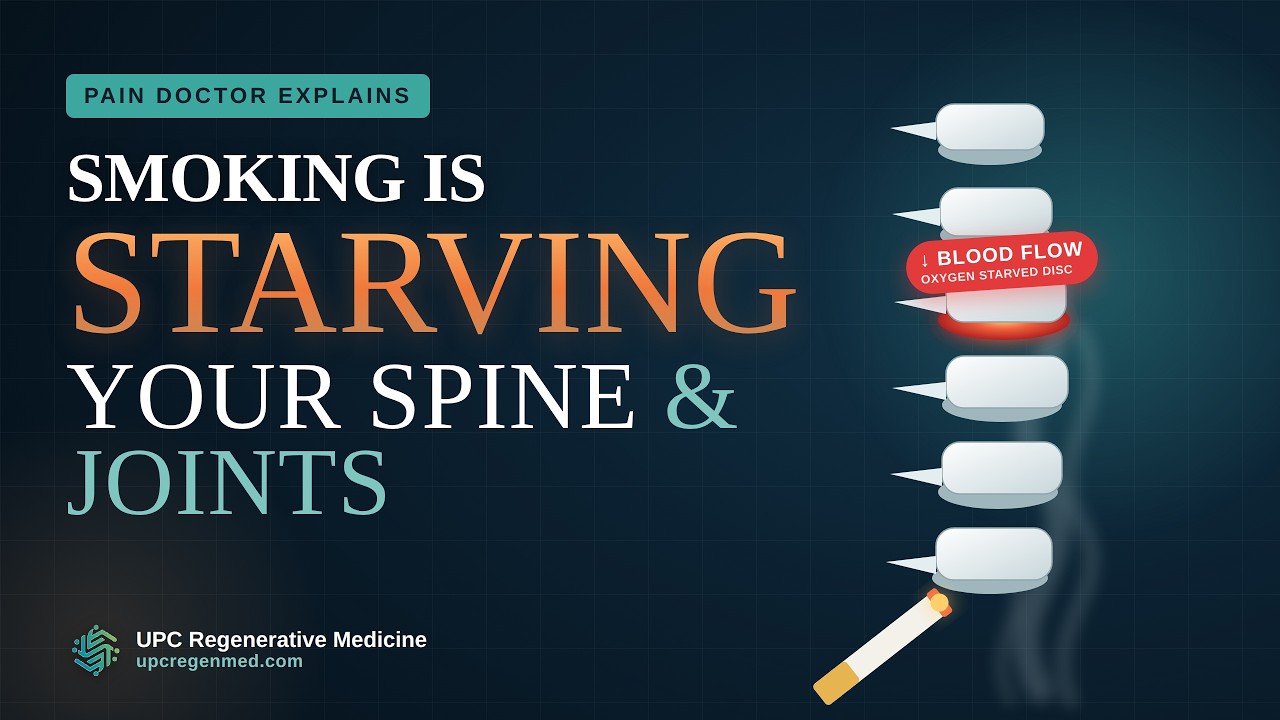
Your spine is built from bones (vertebrae) cushioned by soft, gel-filled discs. Those discs depend on a steady supply of oxygen and nutrients to stay springy and healthy. The connection between smoking and degenerative disc disease comes down to one thing: blood flow. Every cigarette reduces the oxygen and nourishment reaching your discs, so they wear out faster than they should.

How cigarette smoke starves your discs and joints
When you inhale cigarette smoke, nicotine narrows your blood vessels — a process called vasoconstriction — while carbon monoxide displaces the oxygen your blood should be carrying. The result is less oxygen-rich blood reaching your tissues, which is exactly why smoking and degenerative disc disease so often appear together.
In short, smoking harms your spine and joints by:
- Narrowing blood vessels and cutting oxygen to discs and joints
- Slowing delivery of the nutrients discs need to repair themselves
- Speeding up disc dehydration and cartilage breakdown
- Increasing inflammation and pain sensitivity
- Weakening healing after injury or surgery
Why your spine is so vulnerable
Your spinal discs and joint cartilage have little to no blood supply of their own. Instead of receiving oxygen and nutrients directly, they depend on diffusion — nourishment slowly seeping in from nearby blood vessels.
When smoking cuts that blood flow, these tissues are among the first to be starved. Over time, discs dry out and break down faster, cartilage wears thinner, and osteoarthritis sets in sooner. This is the core of how smoking and degenerative disc disease feed each other.
Watch Dr. Guiang explain it in under four minutes:
Smoking, your knees, and degenerative joint disease
The same oxygen shortage that damages spinal discs also affects the cartilage in your weight-bearing joints. That is why smoking is linked to faster cartilage loss and a higher risk of degenerative joint disease and osteoarthritis in the knees and hips.
Smokers also tend to report more joint pain and stiffness. As the cushioning cartilage wears down, bones move closer together, and everyday activities like walking or climbing stairs can become painful.
More pain and slower healing
Because smoking and degenerative disc disease go hand in hand, a smoker’s discs and joints are chronically under-nourished — so they degenerate sooner and hurt more. Smoking is also tied to higher inflammation and poorer healing.
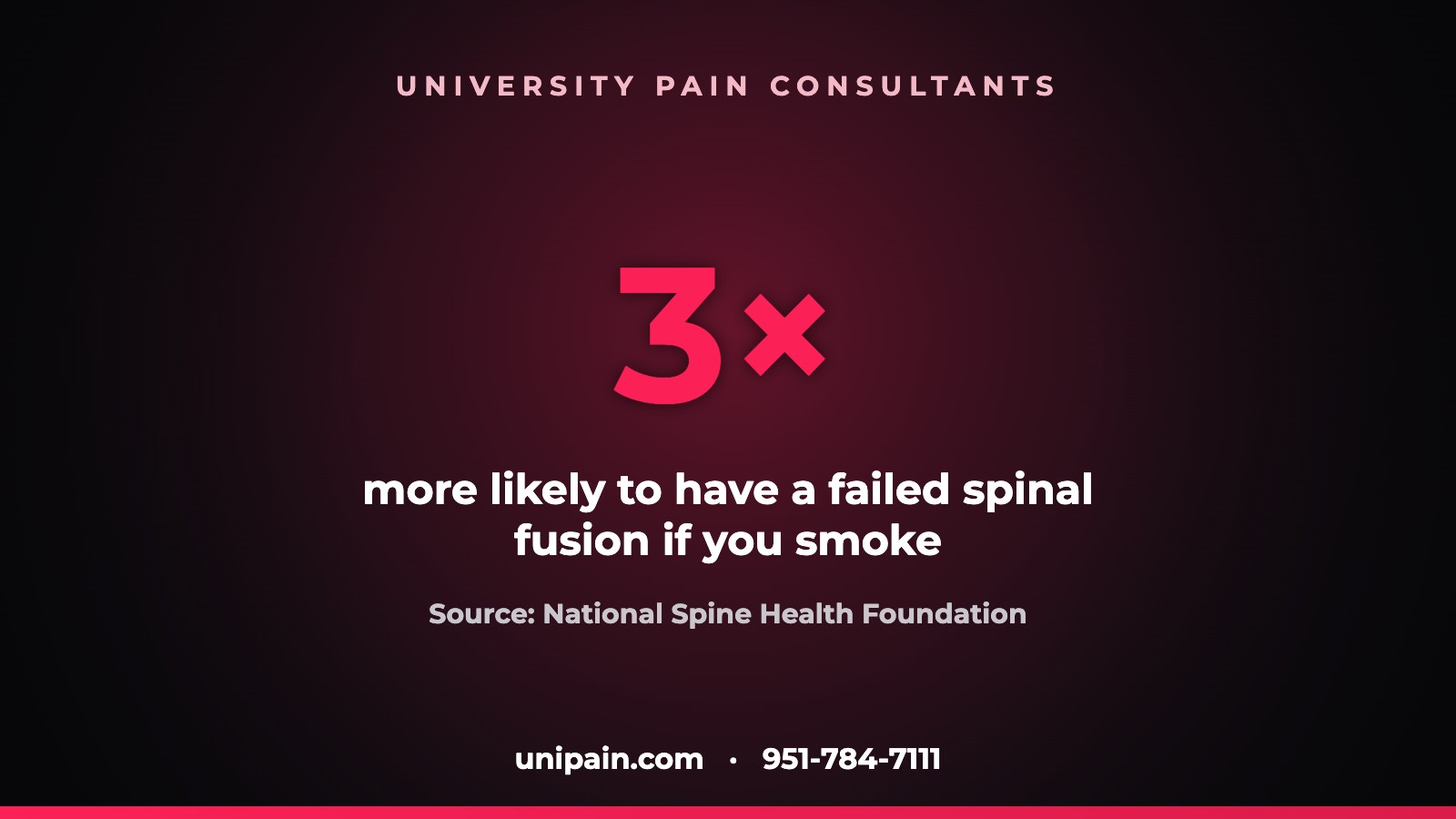
That means treatments — from physical therapy and injections to newer options like red light therapy and regenerative medicine — often work less well while a person keeps smoking. In fact, smokers are about three times more likely to have a failed spinal fusion than non-smokers, according to the National Spine Health Foundation.
Which spine conditions smoking makes worse
Because smoking and degenerative disc disease progress together, smokers are more likely to develop several painful spine problems, including:
- Herniated or bulging discs — weakened, dehydrated discs are more likely to tear or bulge
- Sciatica — degenerating discs can press on nearby nerves, sending pain down the leg
- Spinal stenosis — narrowing of the spinal canal that worsens as discs collapse
- Chronic neck and low back pain — the most common everyday result of disc breakdown
How to protect your spine and joints if you smoke
Whether or not you are ready to quit today, there are steps that help protect your spine and joints. Quitting is by far the most powerful, but these habits all help slow smoking and degenerative disc disease:
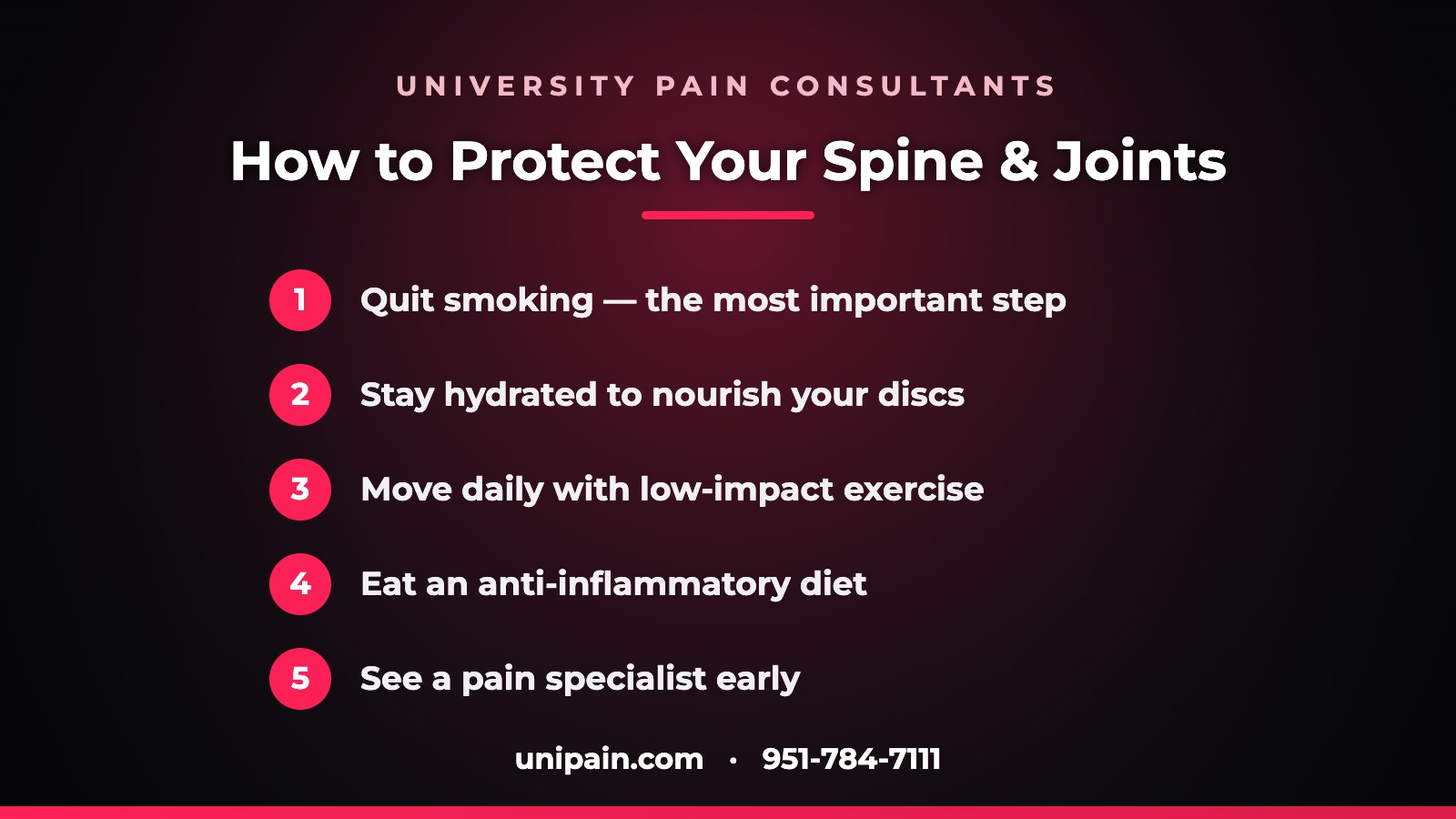
Staying well hydrated helps your discs hold onto the water that keeps them cushioned. Gentle, regular movement pumps nutrients into the discs and keeps joints mobile, while an anti-inflammatory diet supports healing. Most importantly, do not wait to have persistent pain evaluated — early care gives you more options.
The good news: quitting helps your spine and joints
Here is the encouraging part. Quitting smoking helps restore healthy blood flow to your spine and joints, slows further damage, and gives every treatment a far better chance to succeed. Quitting is the single best way to slow smoking and degenerative disc disease before it worsens.
It is never too late. Within days to weeks of your last cigarette, circulation improves and your discs and joints begin receiving more of the oxygen they need. Pairing smoking cessation with the right pain management plan is one of the most powerful steps you can take for lasting relief.
Frequently asked questions
Does smoking cause back pain?
Smoking does not cause back pain directly, but it is a major risk factor. By starving your spinal discs of oxygen, smoking speeds up degenerative disc disease, a common source of chronic back and neck pain.
Can quitting smoking reverse degenerative disc disease?
Quitting cannot undo damage that has already happened, but it can slow the progression of smoking and degenerative disc disease and improve how well your body responds to treatment.
How long after quitting will my back feel better?
Everyone is different, but circulation starts improving within days of your last cigarette. Many people notice better healing and less pain over the following weeks and months, especially when they combine quitting with physical therapy or other care.
Is vaping or are e-cigarettes safer for your spine?
Vaping still delivers nicotine, which causes the same blood-vessel narrowing that starves your discs. It is not a safe alternative for your spine and joints.
How does smoking affect spine or joint surgery?
Smokers face higher rates of complications, infection, and failed healing after surgery, which is why many surgeons ask patients to quit before an operation.
Understanding the link between smoking and degenerative disc disease is the first step. If back, neck, or joint pain is affecting your life, the team at University Pain Consultants can help you build a plan for lasting relief. Call us at (951) 784-7111 or visit our locations page to request a consultation.

Rainier Guiang, MD
Dr. Rainier Guiang co-founded University Pain Consultants in 2007 and is double board-certified in anesthesiology and pain management through the American Board of Anesthesiology. He previously served as co-director of the ACGME-accredited pain management fellowship at University Hospitals of Cleveland / Case Western Reserve University School of Medicine, and has authored chapters in Weiner’s Pain Management. He has a strong interest in interventional, functional, and preventive approaches to chronic pain.