About Me
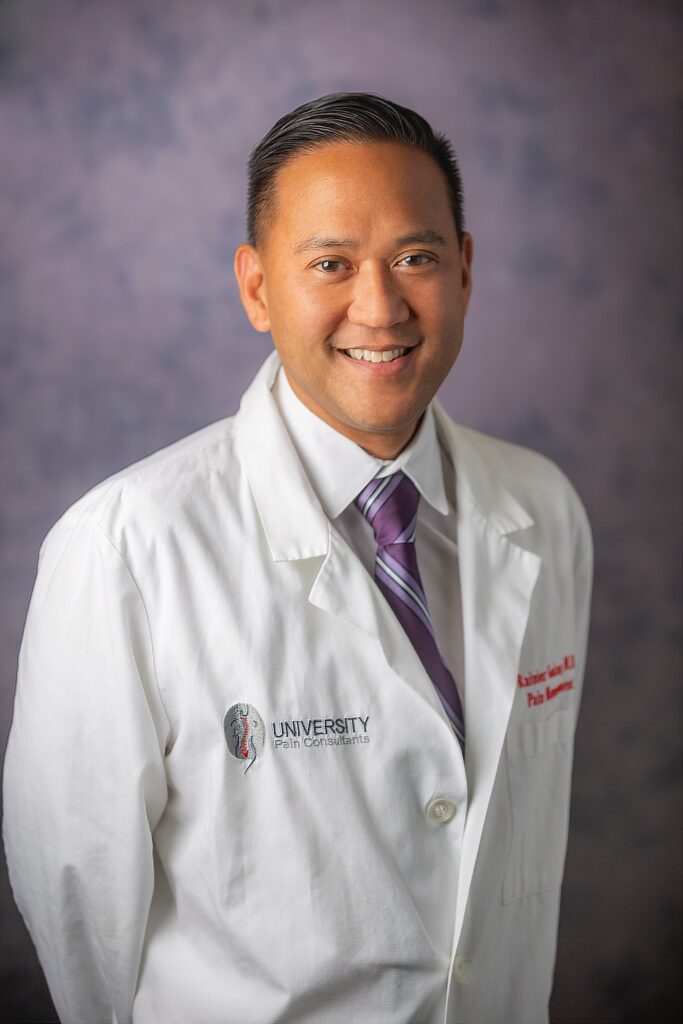
Rainier Guiang, MD
Dr. Rainier Guiang co-founded University Pain Consultants in 2007. Before coming to Riverside, Dr. Guiang was the co-director for the ACGME accredited pain management fellowship program at the University Hospitals of Cleveland / Case Western Reserve University School of Medicine. He has a strong interest in academics and was responsible for teaching and supervising medical students, residents, and fellows. He is double board certified in anesthesiology and pain management through the American Board of Anesthesiology. He has authored textbook chapters in the latest edition of Weiner’s Pain Management, the official textbook of the American Academy of Pain Management.
Dr. Guiang is a proponent of both functional medicine and alternative medicine as he realises that most chronic diseases have no cure. The best cure is prevention of the disease. However, some diseases are curable through a change in lifestyle and diet. Diabetes Type 2, obesity, and perhaps even Alzheimers may be reversed through such changes.
UPC Regenerative Medicine
Regenerative Medicine & Advanced Therapies
Dr. Guiang leads University Pain Consultants’ regenerative medicine and advanced-therapy program, drawing on his anesthesiology and interventional pain medicine training to offer natural, evidence-informed alternatives to surgery and long-term opioid therapy. These services are delivered through UPC Regenerative Medicine, the practice’s dedicated regenerative and wellness center serving Riverside and Menifee, California.
Platelet-Rich Plasma (PRP) Therapy
PRP concentrates the growth factors already circulating in your own blood and delivers them directly into injured tissue — supporting repair rather than simply masking pain. Dr. Guiang performs image-guided PRP for knee and shoulder osteoarthritis, tennis and golfer’s elbow, plantar fasciitis, sacroiliac joint pain, and chronic tendon injury. Because PRP is autologous, there is no risk of allergic reaction or rejection.
IV Ketamine Infusion Therapy
Low-dose intravenous ketamine acts on the NMDA receptor and can help interrupt the central sensitization that keeps chronic pain amplified long after the original injury has healed. Offered for CRPS, fibromyalgia, neuropathic pain, and treatment-resistant depression. As a board-certified anesthesiologist, Dr. Guiang personally administers and monitors every infusion.
Low Dose Naltrexone (LDN)
At doses far below those used in addiction treatment, naltrexone appears to calm activated glial cells in the central nervous system — a mechanism that may explain its usefulness in fibromyalgia, CRPS, inflammatory bowel disease, and other inflammatory pain states. LDN is compounded to each patient’s dose and pairs naturally with the dietary changes below.
Red Light Therapy (Photobiomodulation)
Specific wavelengths of red and near-infrared light are used to support mitochondrial function in treated tissue. Dr. Guiang takes a deliberately measured view of the evidence here and will tell you plainly where it is strong and where it is still thin.
IV Infusion Therapy & Nutraceuticals
Infusions deliver vitamins, minerals, and antioxidants directly into the bloodstream, bypassing the absorption limits of the gut, with protocols tailored to the individual patient. For oral supplementation, Dr. Guiang maintains a curated, professional-grade dispensary organized by category — anti-inflammatory, nerve support, joint support, omega/EFA, and more.
Botox & the Stellate Ganglion Block
Botox is used for chronic migraine, myofascial pain, and cervical dystonia, where it relaxes overactive muscle and may modulate pain signaling. The stellate ganglion block — long used for sympathetically maintained pain — is also offered for PTSD, anxiety, and depression.
Restorative & Aesthetic Regenerative Care
The same biology that helps injured tissue heal also supports restorative work — hair restoration, facial rejuvenation, and under-eye treatment using your own platelet-rich plasma and platelet-rich fibrin.
Considering regenerative treatment?
These therapies are elective and generally not covered by insurance. The evidence base varies by treatment and by condition — Dr. Guiang will tell you honestly when a therapy is unlikely to help you.
Functional Medicine & Nutrition
Anti-Inflammatory Diet & Lifestyle
Dr. Guiang’s interest in functional medicine shows up directly in how he treats pain. Injections and medications manage symptoms — but persistent low-grade systemic inflammation, driven largely by what patients eat and how their blood sugar behaves, is often what keeps pain going. For many patients an anti-inflammatory diet is the highest-yield change they can make between office visits.
Why diet matters in chronic pain
Diets high in added sugar, refined carbohydrate, and ultra-processed food drive repeated insulin spikes and weight gain. Fat tissue is not inert: it secretes inflammatory cytokines that lower pain thresholds, slow tissue healing, and can blunt the response to injections and regenerative treatments.
Conditions such as type 2 diabetes and obesity are largely diet-driven, and both can improve substantially — sometimes dramatically — with sustained changes in eating and activity. That is why Dr. Guiang starts with food rather than pills.
Gut health, inflammation & pain
Increased intestinal permeability is an active area of research in chronic pain. His overview, Can leaky gut cause chronic pain?, explains what the evidence does and does not currently support.
Targeted supplements
Diet comes first, but a few supplements are worth discussing at your visit:
Dr. Guiang’s curated, professional-grade selections are organized by category on the Nutraceuticals for Pain page.
What Dr. Guiang recommends
- Cut added sugar and refined carbohydrate. Soda (including diet soda), fruit juice, sweetened coffee drinks, candy, cookies, and bread products are the first things to go.
- Trial a gluten-free, grain-free diet. Gluten and grain sensitivity is common and often goes unrecognized for years. A strict trial of several weeks is the most practical way to find out.
- Rethink conventional dairy. Conventional animal milk products carry hormones and antibiotic residue and are a common inflammatory trigger. Patients who react usually know within a few weeks.
- Know your lectins and nightshades. Raw or undercooked legumes, wheat germ, and nightshade vegetables are worth testing in stubborn inflammatory pain. See inflammatory foods to avoid.
- Change your cooking fats. Replace vegetable and canola oil with coconut oil, extra-virgin olive oil, or avocado oil.
- Consider time-restricted eating. For patients who are overweight or insulin-resistant, intermittent fasting can lower circulating insulin — but do it with physician guidance, especially on insulin or a sulfonylurea.
- Build meals from real food. Vegetables, clean protein, and healthy fat, prepared at home, beat any supplement regimen layered on top of a poor diet.
Go deeper: Ways to decrease systemic inflammation · Inflammatory foods to avoid
Recent media publications
Chronic Pain Syndrome vs. Fibromyalgia – What’s the difference?
Stephanie Watson, Rainier Guiang, MD
Pain contracts: How many chances do you get at pain management?
Mary West, Rainier Guiang, MD
10 things you should never do before a workout
Issac Robertson, Rainier Guiang, MD

Frequently Asked Questions:
- Does Dr. Guiang participate in Workers Compensation provider networks?
- Dr. Guiang no longer participates in any Workers Compensation networks and will not address any pain complaints that are included in ongoing WC cases.
- Does Dr. Guiang help with applying for disability, FMLA, or other med-legal processes?
- Dr. Guiang does NOT aid in the application of any type of disability, FMLA or other med-legal processes.
- Does Dr. Guiang participate in personal injury cases?
- Dr. Guiang does not participate in personal injury cases. All patients with personal injury complaints must sign a waiver absolving University Pain Consultants from participating in their personal injury cases.